What Happens Before and After Hysteroscopy Complete Patient Guide
8/6/2026 11:30:00 AM Lotus IVF Team
 Introduction
If your gynecologist has advised you to undergo Hysteroscopy Surgery, there might be many questions regarding the surgery process, the post-operation care, risks, benefits, and other important aspects. But do not worry because Hysteroscopic Surgery is a very common surgical operation that aids in diagnosis and treatment of various diseases inside the uterus without making any cuts externally on the body or using stitches.
Doctors in India advise Hysteroscopy Surgery to those females who suffer from excessive menstrual bleeding, fertility problems, repeated abortions, uterine bleeding, uterine polyps, and uterine fibroids. This surgery makes possible to perform the direct visualization of the uterine cavity and treatment of diseases at one time.
This comprehensive guide will help you to understand what happens during and after Hysteroscopy Surgery.
What is Hysteroscopy Surgery? (Diagnostic vs. Operative)
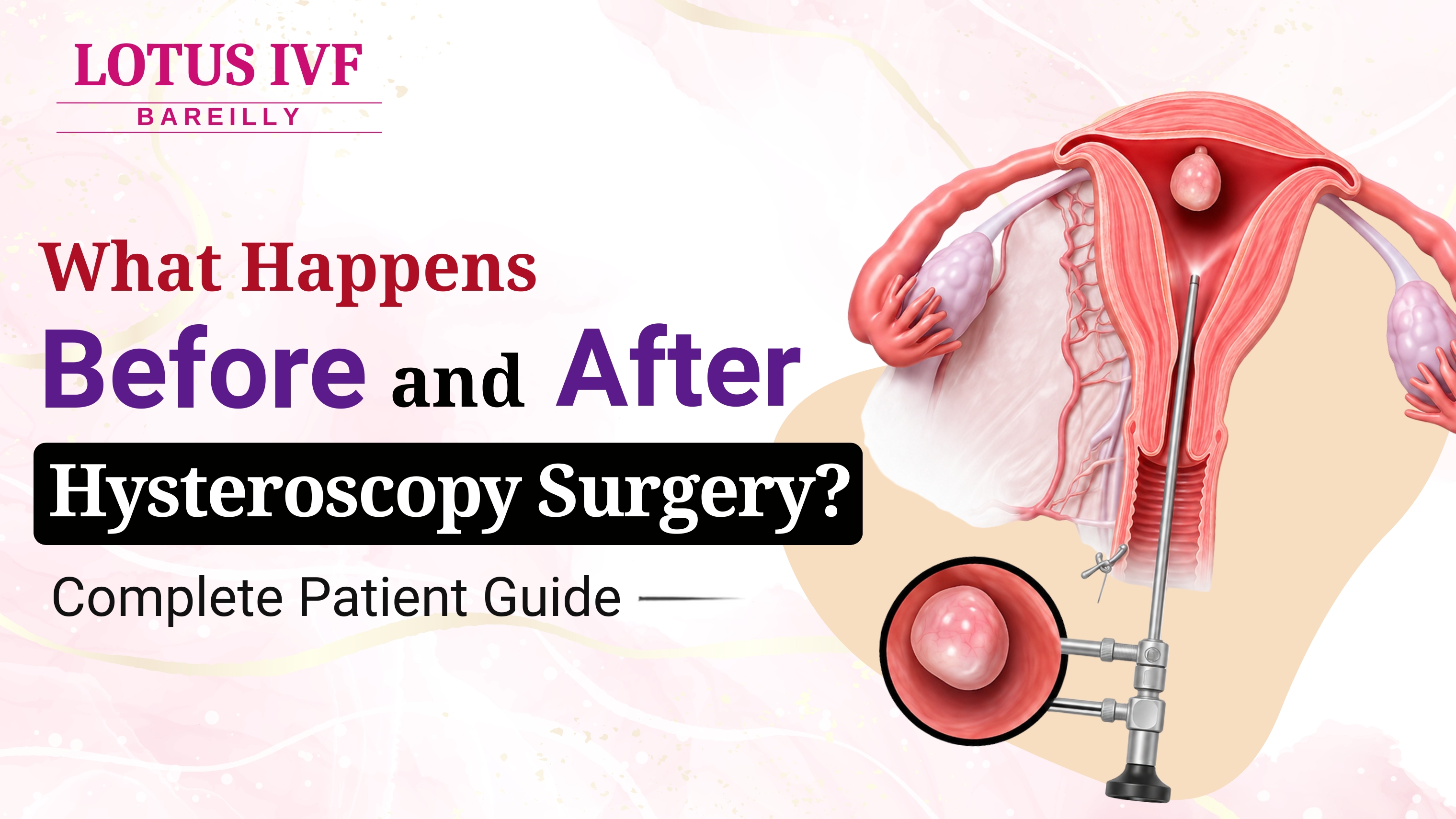
The Hysteroscopy Surgery is a process where the gynecologist can view the inside of the uterus by inserting a telescope-like instrument known as the hysteroscope. The hysteroscope is fitted with a camera and a light to enable the images taken from within the uterus to appear on a monitor screen.
The greatest advantage that Hysteroscopy Surgery presents is that the operation is done via the vagina and cervix without any cuts or scar marks.
Diagnostic Hysteroscopy
Hysteroscopy as a diagnostic tool is done for examination of the cavity of uterus with an aim of diagnosing the following:
- Abnormal uterine bleeding
- Issues associated with infertility
- Miscarriages
- Uterine problems
- Endometrial problems
This process usually takes about 5-10 minutes.
Operative Hysteroscopy
The Operative Hysteroscopy Surgery is done when intervention becomes necessary during surgery. This may include:
- Removal of uterine polyps
- Surgery for selected fibroids
- Removal of scar tissue
- Tissue sampling (biopsy)
- Correction of certain uterine anomalies
The time involved in such operations takes around 15-30 minutes or more.
What Happens Before Hysteroscopy Surgery?
Proper preparation helps ensure that Hysteroscopy Surgery is performed safely and effectively.
1. Scheduling the Procedure
It is normally advised that the procedure be scheduled right after you finish menstruating since during this time, the lining of your uterus is thin, thereby allowing clear visualization of the cavity.
2. Medical Evaluation
Tests before Hysteroscopy include:
- Pelvic ultrasound
- Blood tests
- Pregnancy test
- Medical history
- Physical examination
These tests assist in identifying the best way to treat the condition.
3. Fasting Instructions
In case the procedure is done under general anesthesia, you might be asked not to eat or drink anything for some time prior to the surgery.
In case the procedure requires local anesthesia and light sedation, the fasting might differ.
4. Medicines Review
Tell your doctor about:
- Medicines that thin the blood
- Medicines related to diabetes
- Medicines to lower blood pressure
- Allergies
- Previous surgeries
5. What Indian Patients Should Carry
To ensure comfort at the hospital, think of bringing along:
- Extra sanitary pads
- Comfortable clothes like Kurti, nightwear, or cotton dresses
- Medical records
- Water bottle (only after approval of the staff)
- A company of a family member or companion
What Happens DURING Hysteroscopy Surgery? (Step-by-Step)
Understanding the process can help reduce anxiety before Hysteroscopy Surgery.
Step 1: Positioning and Anesthesia
You will be asked to lie on an examination table similar to a routine gynecological examination.
Depending on the procedure, your doctor may use:
- Local anesthesia
- Sedation
- General anesthesia
Step 2: Gentle Expansion of the Uterus
The hysteroscope is carefully inserted through the vagina and uterus.
Then, a sterile saline solution is injected into the uterus in order to dilate the uterine cavity. Thus, it becomes possible to have a better view of the cavity of the uterus.
Step 3: Inspection and Treatment
The camera will allow the physician to examine the uterine cavity in details.
The doctor can:
- Remove uterine polyps and fibroids
- Remove adhesions or scar tissue
- Take biopsy specimens
- Repair certain abnormalities of the uterus
How Long Does It Take?
The operating time on the operating table will depend on the type of the procedure – diagnostic or operative.
- Diagnostic procedure: 5–10 minutes
- Operative procedure: 15–30 minutes or more
What Happens AFTER Hysteroscopy Surgery? (Immediate & At-Home Recovery)
Most women recover quickly after Hysteroscopy Surgery.
Same-Day Discharge
The Hysteroscopy Surgery is generally considered a daycare procedure. The patient can be discharged from the hospital when he or she is stable.
What You May Feel
After surgery, you will feel:
- Cramping pain similar to menstrual pain
- Vaginal bleeding
- Bloating
- Pelvic pain
- Fatigue
These symptoms usually resolve within a few days.
Hysteroscopy Post-Procedure Care
Following proper hysteroscopy post-procedure care can help ensure a smooth recovery.
Do's
- Take prescribed medications on time
- Stay well hydrated
- Get adequate rest
- Eat light, nutritious meals
- Attend follow-up appointments
Don'ts
- Don’t lift heavy things
- Don’t do vigorous physical activities
- No sexual activity for 1-2 weeks
- Do not swim until your doctor’s permission
Use Sanitary Pads Instead of Tampons
Doctors usually recommend using sanitary pads during recovery.
Avoid:
until your gynecologist advises it is safe.
Hysteroscopy Recovery Time
The typical hysteroscopy recovery time is relatively short.
- The majority of women usually resume their normal activities in 1-2 days.
- Surgical procedures can need somewhat longer recovery period.
- Full healing differs depending on each individual case.
Your physician will give you recommendations specifically for you.
Cost of Hysteroscopy Surgery in India
One of the most common questions patients ask is about the cost of hysteroscopy in India.
The cost of hysteroscopy in India can vary depending on several factors:
- Diagnostic or operative procedure
- Hospital infrastructure
- Doctor's expertise
- City and location
- Type of anesthesia used
Metropolitan cities and advanced fertility centers may have higher charges.
Insurance Coverage
In many cases, insurance may cover medically necessary operative procedures. Coverage depends on:
- Policy terms
- Diagnosis
- Hospital network
- Insurance provider
Patients should confirm eligibility with their insurance company before treatment.
When to Call Your Gynecologist
Although complications are rare, you should contact your gynecologist right away if you have:
- Severe abdominal or pelvic pain
- Heavy bright red bleeding
- Soaked multiple sanitary pads within one hour
- Fever
- Chills
- Continuous vomiting
- Malodorous vaginal discharge
- Dizziness
- Fainting
Medical assistance is needed to avoid complications.
Expert Care at Lotus IVF Bareilly
In Lotus IVF Bareilly, women undergo full gynecology and infertility treatment services under the supervision of Dr. Shruti Ghate, who is a competent fertility specialist.
If you have any issues related to infertility, irregular uterine bleeding, recurrent pregnancy loss, or uterus polyps/fibroids, getting your condition diagnosed and treated at the right time can greatly benefit you.
Conclusion
The Hysteroscopy Surgery is an efficient, safe, and minimally invasive technique that can help diagnose and treat a wide variety of uterine conditions. There are no incisions made, so the post-procedure healing period is fairly short, and most of the people get discharged on the same day.
Understanding the procedure, expected hysteroscopy recovery time, proper hysteroscopy post-procedure care, and the cost of hysteroscopy in India can help you feel more confident and prepared for treatment.
In case you have doubts regarding infertility, abnormal bleeding, recurrent miscarriage, and other uterine problems, visit a competent gynecologist. For professional assistance with fertility, contact Dr. Shruti Ghate of Lotus IVF Bareilly.
Frequently Asked Questions (FAQs)
Q1. Is Hysteroscopy Surgery Painful?
Most women will suffer from minor discomforts only. The intensity of the pain is based on the nature of the surgery done and the kind of anesthesia applied. Cramping after Hysteroscopy is normal and can be treated with the medications provided.
Q2. How Many Days of Bed Rest Are Required After Hysteroscopy Surgery?
Bed rest is unnecessary most of the time. Most women are able to go back to their normal routine after about 24–48 hours but you may be required to avoid strenuous activities for one to two weeks.
Q3. Can I Get Pregnant After Undergoing Hysteroscopy?
Yes. In fact, Hysteroscopy is conducted with the aim of making women fertile again through the treatment of uterine conditions like uterine polyps and fibroids, adhesions, and abnormality in uterine cavity.